I first became aware of
Transmedia Storytelling during a discussion with Mike about my COP3 proposal. I was talking about my interests in storytelling and the range of platforms I was currently interested in. After we had a discussion about the concept of 'transmedia storytelling' I wanted to find out some more information so that it could become a possible subject to explore for my third year. Transmedia storytelling (
which may also be referred to as transmedia narrative or multiplatform storytelling) is the method or technique of telling a single story or a 'story experience' across multiple platforms and formats using current digital technologies. By story experience, I'm referring to the audience being in some way brought into the world of the story through the use of digital technology and given the chance to become immersed in the themes and content of the world the story is set. An example of this type of experience was used to promote the channel 4 series,
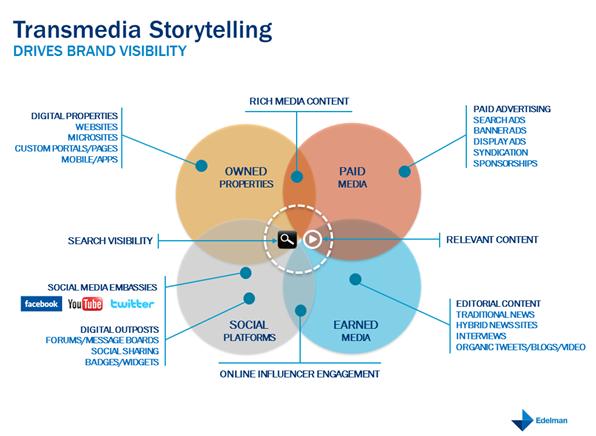
Utopia. The audience was tweeted content related to the shows themes and connected to the story in this way. What I found interesting at first about the concept of transmedia storytelling was that it wasn't just for entertainment value and communication it has a dual purpose in that it is also incredibly effective at promoting content and advertising something to an audience on a larger scale. There is also a lot of room for innovation in this sense. Furthermore, when I first looked into the technique I was wrong in thinking that it simply meant telling the same story using a different platform or medium, and whilst this
can be the case, it is also the case that another story with separate characters but from the same universe as another story can be told using another platform as its method of delivery. The example I keep using because I think it has a lot of different platforms behind it is,
The Walking Dead. This particular franchise is huge and spans multiple different platforms whilst telling a lot of different stories from The Walking Dead Universe. For example, originally a graphic novel tell a specific story that at this point has around 20 volumes of content, there is also novels telling different stories from that world, or even back stories of pre-existing characters. As well as this there is a television series based heavily on the graphic novel series and finally, a video game series using a different storyline than all of the previous platforms that was produced by Telltale Games. Of course, there are countless examples of transmedia storytelling and with the constant evolution of digital technology and platforms such as social media, new avenues are yet to be explored in what is possible for this method of storytelling.
During our first discussion on the topic, Mike referred me to Henry Jenkins, author of the book
Convergence Culture. Henry Jenkins has written quite extensively given the relatively new concept and has warned that as an emerging subject, different people have different understandings of what transmedia storytelling actually is. He mentions specifically that the term 'transmedia' actually means "across media" and may be applied to similar, but different concepts. I think this is an important point and I refer back to myself slightly misunderstanding the concept when I first read about it. It is important to remember that 'transmedia storytelling' should not to be confused with 'cross-platform' franchises. The concept as a whole, despite the specifics is incredibly broad and what is interesting to think about is the amount of opportunities there is for storytelling in this manner. The production of transmedia material involves creating content that engages audience and should inherently be innovative and exciting to be the most effective in this regard. To take full advantage of the transmedia technique, each piece of content delivered must provide the audience with a unique experience and a good piece of content within each avenue of delivery. Finally, they should all be interconnected and linked together so that the audience can move between them and get the most from the experience while being able to involve people who may not have access to them all at once.

No comments:
Post a Comment